How to Choose a Video Production Partner for Your St. George Business
A practical Southern Utah guide to choosing a video production partner for brand films, product videos, internal training, events, and social content.
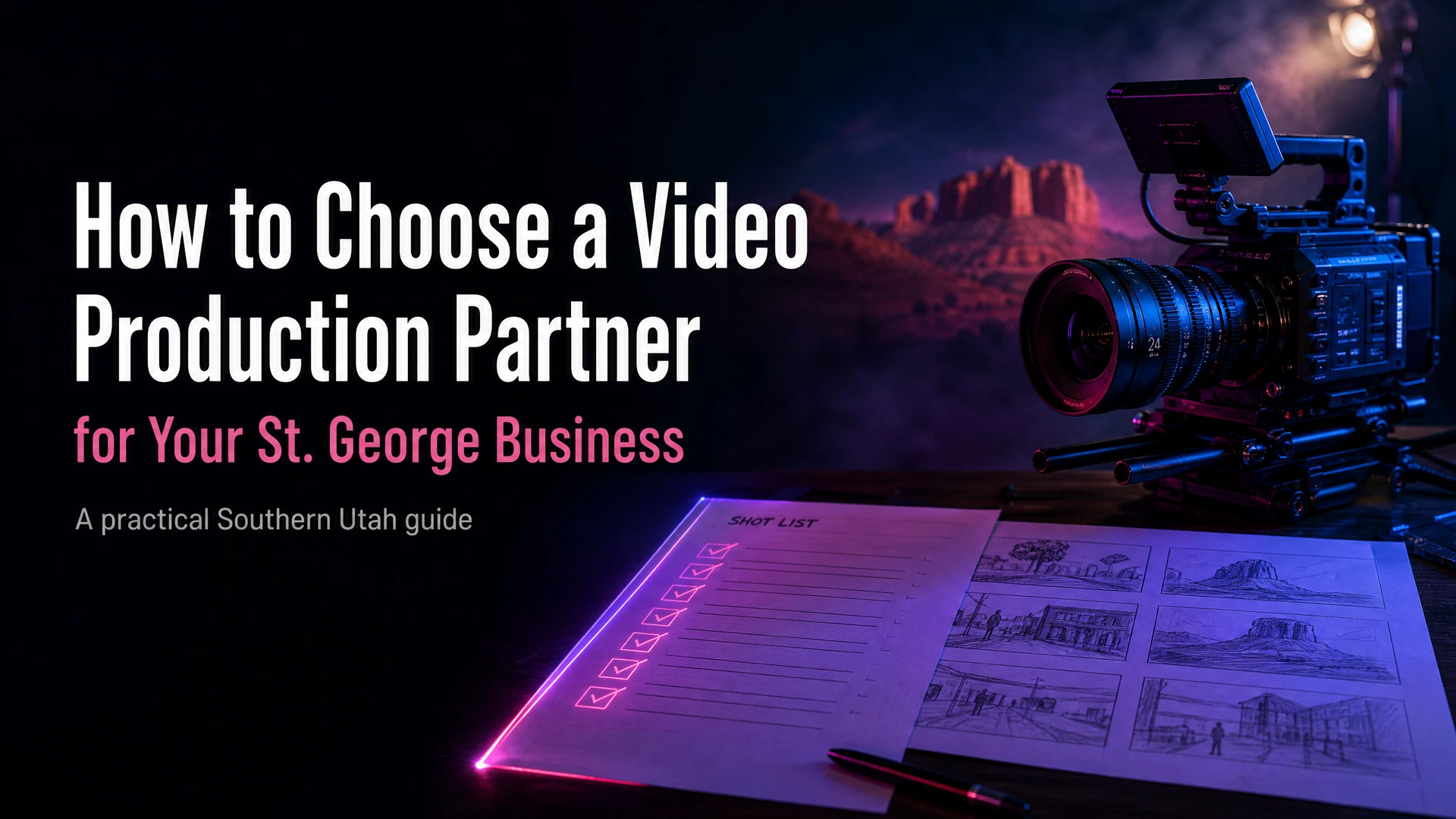
Hiring a video production partner can feel strangely high stakes. You are handing someone your team, your time, your location, and possibly the only clean shirt your owner owns to use on camera. It is reasonable to want the result to feel polished. It is even more reasonable to want the process to be clear, calm, and useful after the final file arrives.
The right partner is not simply the team with the most dramatic drone shot. They are the team that can understand what the video is meant to accomplish, plan the work around your real business, make people comfortable on set, and deliver assets that fit where your customers will actually see them.
Start with the job the video needs to do.
A brand film, a product video, an internal training piece, an event recap, and a recruiting video can all look beautiful. They should not all be planned the same way. Before comparing reels, ask what you need the viewer to understand, feel, or do after watching. If the answer is “everything,” take a breath. That answer is common, but it is not yet a brief.
A local business may need a first impression for its website, a clear explanation for a complicated service, a set of social clips, or training that saves the team from explaining the same task 47 times. The goal changes the audience, the script, the interview questions, the shooting day, and the edit. A production partner should help define that job before recommending a camera package.
Look for a planning process, not just a pretty reel.
A strong portfolio matters, but it is only one part of the decision. The work that happens before filming usually determines whether the shoot feels focused or frantic. Adobe’s production guidance describes preproduction as the planning stage for goals, concepts, storyboards, schedules, budgets, location scouting, and shot lists. It also recommends planning the release strategy early, before cameras roll. [1]
Ask a prospective partner how they turn a business goal into a production plan. Who writes or shapes the brief? How are interview subjects prepared? What happens when weather, a location, or a calendar changes? How do they decide what belongs in the main edit versus a social cut? Clear answers are a good sign. A vague promise to “make it cinematic” is lovely, but it does not tell you whether anyone has remembered the service elevator.
Protect the people on camera, especially when they are not actors.
Most local business videos involve owners, employees, customers, educators, or subject-matter experts who did not wake up hoping to become a human teleprompter. A good crew makes that easier. They prepare the room, lighting, sound, and camera framing before the person who needs to speak steps in. They ask clear questions. They leave room for natural language. They do not make a team member repeat a sentence 19 times until it sounds like it was written by a fax machine.
This matters for corporate, internal, recruiting, and testimonial work as much as for a polished brand story. Clear audio, a calm process, and enough time for a real answer often matter more than a trendy transition. Adobe also recommends planning for location sound, simple backgrounds, and clear audio as foundational production decisions. [1]
Plan for more than one useful deliverable.
The best video projects often create a small system of assets, not one lonely file that lives on a website page and visits daylight twice a year. A primary brand film might support shorter social edits, a cut for a sales presentation, a website header clip, still frames, or a version for a trade event. That does not mean every project needs 38 deliverables. It means the conversation about format and use should happen before the shoot, while the right shots are still possible.
If YouTube is part of the mix, its creator guidance recommends balancing timely and evergreen work, using audience insights, and keeping titles and thumbnails clear and accurate. [2] The same principle helps on your own site. A clear purpose and a clear next step make the video more useful to the person watching it, even if they never learn what a color grade is.
Choose the team that fits your business, not the loudest highlight reel.
There is no universal best production company. There is a best fit for the project, budget, audience, and working style. Look for relevant examples in the Video Production portfolio. If you are producing training or an internal piece, ask to see work that explains something clearly. If you need a brand story, ask how interviews, b-roll, and location details become a narrative rather than a montage of hands opening doors.
You can also review client stories to understand how a partner works over time. The right conversation should cover scope, timeline, responsibilities, review rounds, licensing, delivery formats, and what success means for your team. That is not unglamorous administrative work. It is how everyone gets to enjoy the glamorous part without a surprise invoice hiding in the shrubbery.
Before you request a proposal
Five questions that make a video conversation much more useful.
Quick questions, answered.
How early should we involve a production partner?
As early as you can describe the business goal. Early planning gives the team more options for stories, locations, schedules, and useful deliverables. It also makes it easier to decide whether a project should be one focused shoot or part of a larger content plan.
Do we need a script before we talk to a production company?
No. A clear goal and an honest description of your audience are enough to begin. The right partner can help shape a brief, outline, interview approach, or script that sounds like your business rather than a brochure with a caffeine problem.
Can one shoot create social content too?
Often, yes. Mention that need before filming so the production plan includes vertical framing, short moments, extra b-roll, and the right deliverables. It is far easier to capture those pieces on purpose than to ask an edit to invent them later.
Good video begins with a clear question and ends with work you can keep using.
The goal is not to make a business look like somebody else. It is to make its story, process, people, and value easier to understand. When planning and production work together, the camera becomes much less intimidating and much more useful.
Talk through a video project