Short-Form Video Strategy: How Local Brands Can Win on Instagram & TikTok
A practical Southern Utah guide to creating short-form social video with clear customer questions, platform-native structure, and a repeatable local content system.
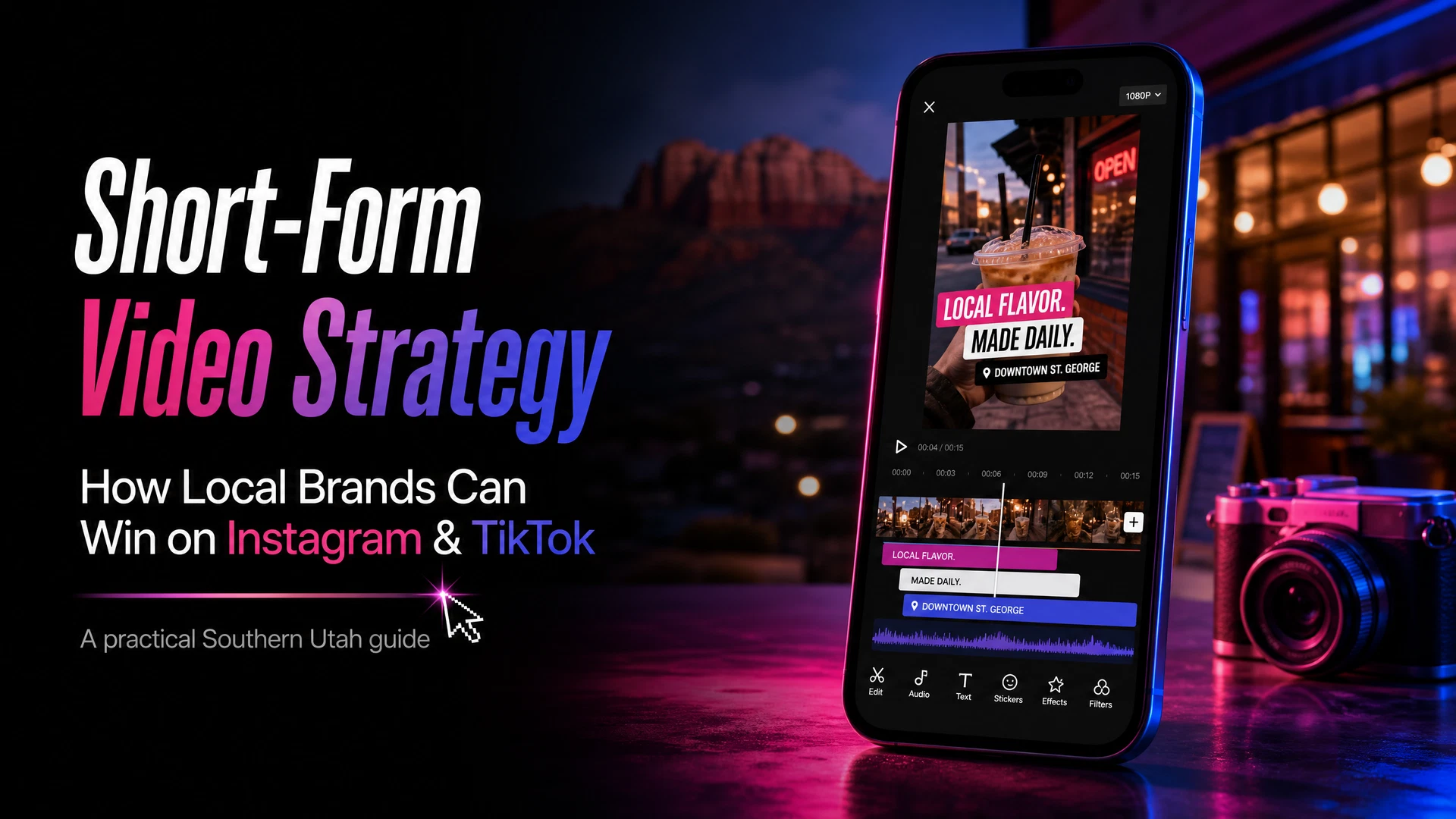
A local business does not need to become a full-time content studio to make short-form video useful. It needs a practical way to show people what it knows, what it makes, who it helps, and what happens after a customer reaches out. Instagram and TikTok can be excellent places for that work, especially when the content feels like a real extension of the business instead of a desperate attempt to trick the algorithm into liking us.
The good news is that the most effective ideas are often already happening inside your business. A question a customer asks at the counter, a process your team knows by heart, a product detail people miss, or a local event you are part of can all become useful material. The strategy is to choose those moments on purpose and give them a clear job.
Start with the customer’s question, not a content calendar that looks busy.
A useful local post starts with a moment your customer actually has. They are wondering what something costs, whether a product fits, how an appointment works, what the place feels like, or whether a local team can solve a problem they have been putting off. That question is the story. The camera is simply invited to the meeting.
For a Southern Utah retailer, that might be a quick “three gifts under $50” walk-through before a weekend event. For a service business, it might be a technician showing what happens in the first ten minutes of a visit. For a restaurant, it might be the answer to “what should I order if I have never been here?” None of those ideas require a viral dance, a rented fog machine, or a 42-slide approval deck.
Make the video feel native to the platform, while still sounding like your business.
Platform-native does not mean unprofessional. It means the video fits the way people already watch. TikTok’s current creative guidance recommends vertical 9:16 content, at least 720p footage, space for the app interface, captions or text overlays, and a clear opening hook. It also encourages brands to use a direct hook, a useful middle, and a clear close. [1]
That is a helpful production checklist, not a personality transplant. Your business does not need to imitate every trend that crosses the internet at 2:14 a.m. It needs a recognizable voice. A friendly local expert, a thoughtful owner, a skilled technician, or an honest behind-the-scenes point of view will usually age better than trying to wear somebody else’s punchline.
Give each video one job before anyone presses record.
The most useful question before filming is not “will this go viral?” It is “what should a viewer understand, feel, or do after this?” A video can introduce a service, prove a process, answer a common objection, show personality, or invite a local customer to take one next step. Trying to do all five in one 14-second clip is how a perfectly good video turns into a tiny, stressed-out commercial.
At Electric Edge Media, our Social Media service is built around calendars, community management, and platform strategy. The goal is a connected system where each piece of content has a role. Some posts create familiarity. Some help a customer decide. Some give people a reason to save, share, or send a message. The plan should make room for all three.
Build a repeatable system, not a weekly scramble for inspiration.
A reliable content rhythm is usually easier than it looks when you batch the work. Choose two or three recurring content lanes, such as customer questions, behind-the-scenes proof, and local personality. Collect examples during one filming block. Then edit the raw material into several vertical videos, stills, stories, and captions. A single well-planned session can create more options than a month of opening the camera app and hoping for divine intervention.
Short-form content also works better when it is connected to your broader brand. A polished video production project can provide core footage, while social edits create the frequent touchpoints. Your website should give interested viewers a next destination. Your team should know who answers messages. The result is less “we posted something” and more “we made it easier for a local customer to move forward.”
Use the response to learn, not to panic after every post.
Look beyond a single vanity metric. Saves can signal practical usefulness. Shares can signal relevance. Comments and direct messages can reveal the questions that deserve a follow-up video. Clicks, calls, and in-store comments help connect content to the rest of the customer journey. The point is not to turn every post into a courtroom cross-examination. It is to notice patterns and make the next round smarter.
YouTube’s creator guidance makes a similar point: a thoughtful plan, a balance of timely and evergreen ideas, and audience insights give you room to improve over time. [2] That is useful whether the final home for a video is YouTube, Instagram, TikTok, or all three in formats that make sense for each platform.
A practical first month
A four-week short-form system that does not eat your whole calendar.
Quick questions, answered.
Do we need to post every day?
Not if daily posting makes the work weaker or impossible to sustain. A clear, consistent rhythm that your team can maintain is more useful than a burst of activity followed by six weeks of silence. Start with a cadence you can support, then refine it from there.
Should every video use a trend?
No. Trends can be helpful storytelling templates when they fit your voice, but they are not the strategy. A useful customer question, a clear demonstration, or a genuine local moment will often provide more lasting material.
Can one filming day create enough social content?
Often, yes. With a plan, one session can produce several clips, still images, stories, captions, and edits. The key is filming intentionally for several formats rather than treating a single video as the only deliverable.
The best local content feels useful before it feels promotional.
When your short-form video answers a real question, shows genuine work, and makes the next step obvious, it has a job beyond filling a feed. That is the kind of content system local businesses can keep using long after one trend has packed its tiny digital suitcase and left town.
Build a practical content rhythm